Hunter ND Pole Barn Builders | Machine Sheds for Open Prairie Farms
Machine sheds and farm buildings around Hunter in northern Cass County, where the operations are large and the exposure is total. Nothing upwind for miles, which puts every site in the open-country wind category and makes an open front the more demanding case, not the cheaper one. Fargo ND Pole Barn Builders also builds across the rest of Cass County, North Dakota and Clay County, Minnesota.
Get a quote on your building
Tell us the size, the use and where the site is. We will come back with a scope and a price, not a brochure.
Hunter ND Pole Barn Builders
Open prairie, big farms, big buildings
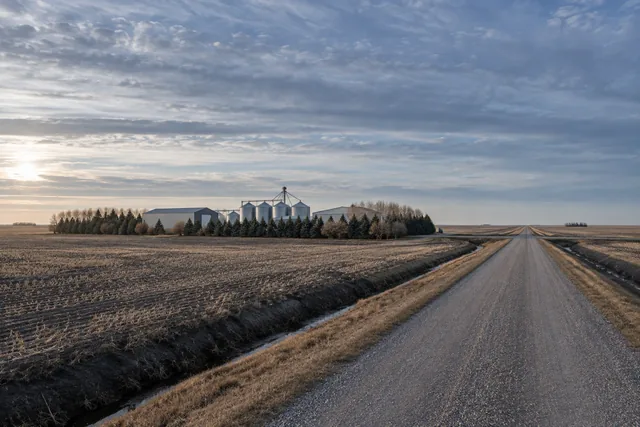
Hunter sits in northern Cass County with around 332 residents, surrounded by some of the largest farming operations in the region. The ground is flat, the fields are large, and there is essentially nothing upwind of any given farmstead to slow the wind down.
That exposure is the defining design factor here. It means Exposure Category C without argument, it means drift accumulation against any obstruction, and it means the bracing and uplift connections on an open-front building matter more than they do closer to town.
Building on fully exposed prairie
Four things that matter more here than closer to town.
- Uplift, not just gravity
Wind trying to lift a roof off is the load case that governs the connections on open buildings. Every truss bearing gets a rated mechanical tie sized against the calculated uplift.
- Which way the opening faces
Winter wind here is generally out of the northwest. An open front facing it will fill with snow. Turning the building is free at design stage and impossible afterwards.
- Where the shelterbelt drops its snow
Existing shelterbelts have been telling you where drifts form for decades. That information is more useful than any calculation.
- Access in a storm
A building you cannot reach in February is a building you cannot use. Yard layout and approach direction are worth thinking about.
How we build in Hunter
- Wind exposure taken seriously
Exposure C design pressures, with open-front buildings getting the internal pressure case calculated properly.
- Uplift connections specified by product
Rated ties at every bearing, not whatever was on the truck.
- Drift and shelterbelt interaction considered
Shelterbelts stop wind, which means they also drop snow. Where they sit relative to the building matters.
- Buildings sized for current equipment
Northern Cass machinery is large and getting larger, and the sheds need to reflect that.
Before an open-front build near Hunter
Exposure is the design driver out here, and orientation is free at this stage.
- List the machines and their transport widths
Bay layout follows directly from this, and it is the single most useful document you can hand us.
- Photograph your drifts this winter
Where snow already piles on your yard is better evidence than any calculation, and it should decide which way the building faces.
- Note where the shelterbelt sits
A shelterbelt slows wind, which means it drops the snow it was carrying. Siting a building in that zone is choosing to collect drift for the life of the structure.
- Think about February access
A building you cannot reach in a storm is a building you cannot use. The approach direction is worth as much thought as the door width.
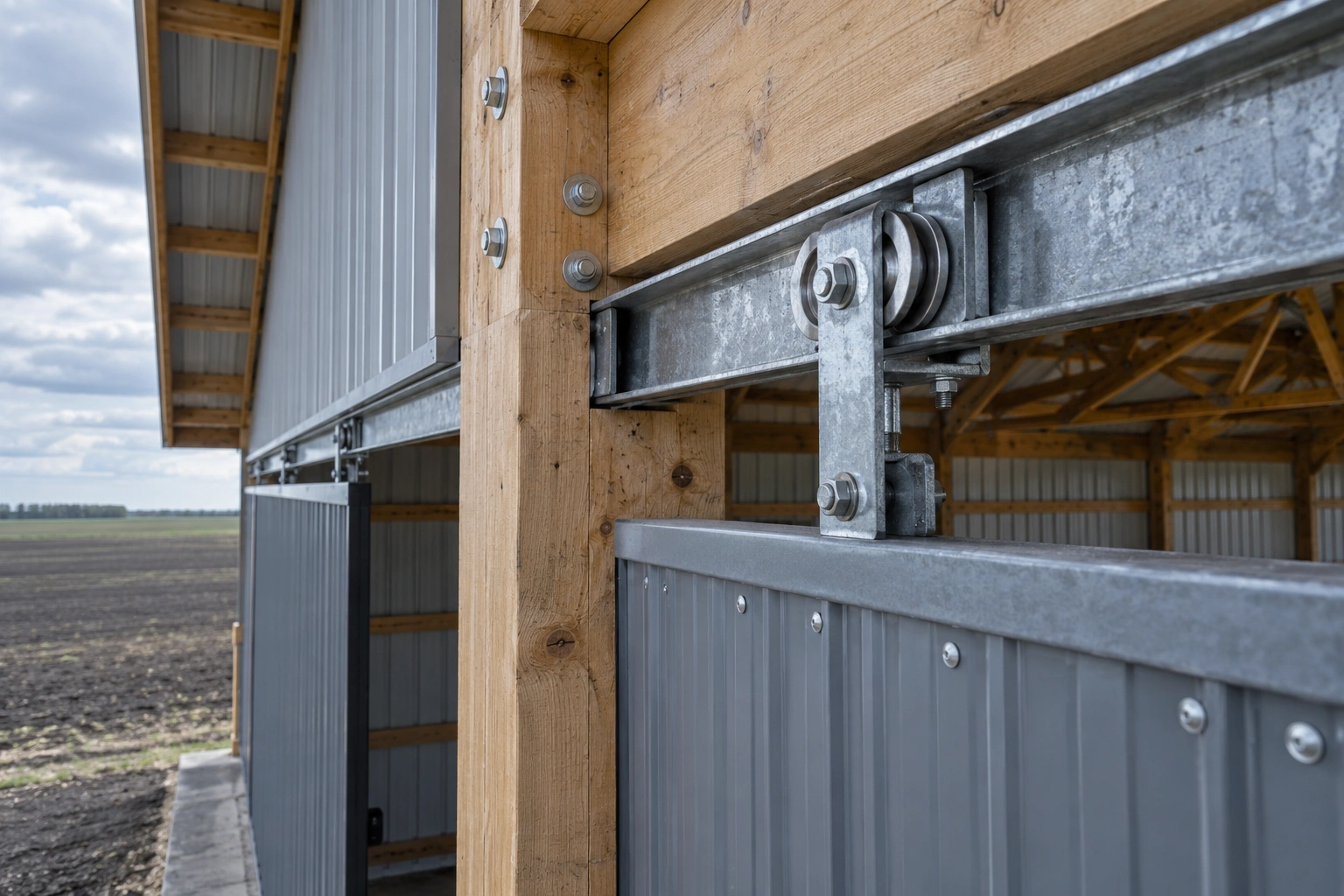
Open-front machine sheds are common here and they are the building type most often under-designed. An open-front building takes wind very differently from a closed one: pressure that would push against a wall goes inside instead and works against the roof from underneath. The uplift case on an open building is more demanding, not less.
Anyone quoting an open-front shed as the cheap option because it has fewer walls has not done that calculation. The saving is real but it is smaller than it looks, and it comes from the doors rather than the structure.
An open front makes the wind case worse, not better
It looks like the cheap option because there is one less wall. Structurally it is the more demanding case: pressure that would push against a closed wall goes inside instead and works against the roof from underneath, and the internal pressure coefficients change accordingly. That means more bracing and better uplift connections, not fewer. The genuine saving on an open-front shed comes from not fitting doors, and it is smaller than most people assume.
Local conditions and figures
Shelterbelts around northern Cass farmsteads are there for good reasons and they interact with snow in ways worth planning around. A shelterbelt slows the wind, which means the snow it was carrying drops out. That is the point, and it means the drift lands somewhere predictable. Siting a new building in that zone is a decision to collect snow.
Conversely, a building placed upwind of nothing at all gets scoured rather than drifted, which reduces the uniform load and increases the exposure to wind. Neither is automatically better; both need to be accounted for.
Distance also changes how a job is run. On a remote northern Cass site we plan material deliveries in fewer, larger loads and try to complete each stage in one visit rather than returning repeatedly. That is why we ask for decisions earlier here than we might closer to Fargo: a change that costs an hour on a Fargo lot can cost a day and a round trip out here.
How a Hunter build runs
- Step 01Equipment and orientation
Machine list and transport dimensions, and the opening orientation checked against prevailing wind and existing drift patterns.
- Step 02Design for Exposure C
Wind pressures calculated for open country, with the open-front internal pressure case where it applies.
- Step 03Pad and foundations
Raised compacted pad, footings to 60 inches, bearing checked in each bore.
- Step 04Frame with connections fitted as you go
Rated uplift ties installed as the frame rises rather than retrospectively.
Questions we get asked in Hunter
Is an open-front machine shed cheaper?
Somewhat, but less than people expect. An open building takes wind differently and needs more bracing and better uplift connections, which spends back part of what you save on cladding. The genuine saving is on doors.
Which direction should the opening face?
Away from the prevailing winter wind, which here is generally from the northwest. Where the yard layout will not allow that, a partial end wall or a windbreak on the exposed side helps considerably.
What wind category applies out here?
Exposure Category C, the open country category, essentially without exception. There is nothing upwind to slow the wind down, and the design pressures reflect that.
How wide should the bays be?
Take the widest point of each machine in transport position and add about three feet of working clearance. For modern grain carts, sprayers and large tractors that commonly lands between 18 and 24 feet, but measuring your own equipment is the only reliable method.
Do you work this far from Fargo?
Yes. Northern Cass County is part of our normal working area and the distance affects scheduling rather than whether we take the job.
Do you charge to come out to Hunter?
Yes, and we will measure your machinery while we are on site, which makes the quote considerably more accurate.
Do you charge extra for the distance out here?
Travel is a real cost and we do not pretend otherwise, but it affects how we schedule and stage a job far more than it affects the price. We plan fewer, larger deliveries and try to complete each stage in a single visit rather than returning repeatedly, which is also why we ask for decisions earlier on remote sites than on a Fargo lot.
Is a permit worth bothering with this far out?
Where one is required, yes, and not mainly because of enforcement. An undocumented building is harder to insure, and questions about it tend to surface at a sale or at a claim, which are the two worst moments. The electrical side is not optional anywhere: the State Electrical Board has jurisdiction over all installations statewide.
Everything we build in Hunter
Everything listed is available around Hunter. Distance affects scheduling and how we stage deliveries, not which services we are willing to take on.
- Agricultural Pole Barns
- Horse Barns & Equestrian Buildings
- Machine Sheds & Equipment Storage
- Livestock Barns
- Hay Storage Buildings
- Pole Barn Garages
- RV & Boat Storage Pole Barns
- Pole Barn Workshops
- Commercial Pole Barns
- Hobby Shops & Man Cave Pole Barns
- Pole Barn Construction
- Pole Barn Design & Planning
- Pole Barn Foundation & Concrete Work
- Pole Barn Framing
- Pole Barn Roofing Installation
- Pole Barn Siding Installation
- Pole Barn Electrical Rough-In
- Pole Barn Insulation Installation
- Pole Barn Repair
- Pole Barn Renovation & Additions
- Post-Frame Building Construction
- Insulated Pole Barns
- Pole Barns with Living Quarters (Barndominiums)
- Custom Pole Barn Doors & Windows
- Pole Barn Loft & Second-Story Additions
- Metal Roof Pole Barns
- Wood-Sided Pole Barns
- Pole Barn Ventilation Systems
- Pole Barn Site Prep & Grading
- Pole Barn Snow Load Reinforcement
Machine storage around Hunter
Send us the equipment list and where the building would go. We will lay out the bays and check the orientation against your drifts.