Amenia ND Pole Barn Builders | Farm Buildings & Storage in Northern Cass
Post-frame farm buildings and storage around Amenia, in the northern Cass County country where bonanza farming began. Very little regulatory complexity out here and a great deal of engineering complexity, because the exposure is total and the ground drains not at all. Fargo ND Pole Barn Builders also builds across the rest of Cass County, North Dakota and Clay County, Minnesota.
Get a quote on your building
Tell us the size, the use and where the site is. We will come back with a scope and a price, not a brochure.
Amenia ND Pole Barn Builders
Bonanza farm country, still farmed at scale
Amenia is a very small community in northern Cass County, in an area historically associated with the Amenia and Sharon Land Company and the bonanza farming era that shaped this part of the valley. The land is still farmed at scale, and the buildings reflect operations rather than residences.
There is very little regulatory complexity here and a good deal of engineering complexity, because the exposure is complete and the ground drains not at all.
Building where nobody is checking
Four reasons to build properly anyway.
- The loads do not care about inspection
Snow and wind arrive whether or not a drawing was reviewed. A roof under-designed for 40 psf will find out eventually.
- Insurance and resale
Buildings with engineering behind them are easier to insure and easier to sell with the property. Buildings without it raise questions at exactly the wrong moment.
- Electrical is regulated regardless
North Dakota's State Electrical Board licenses electricians and enforces the NEC statewide, including where there is no building inspector.
- The exemption is narrower than people think
It covers buildings used exclusively for agriculture on a farm. Add living space, or a non-farm commercial use, and it is gone.
Local conditions and figures
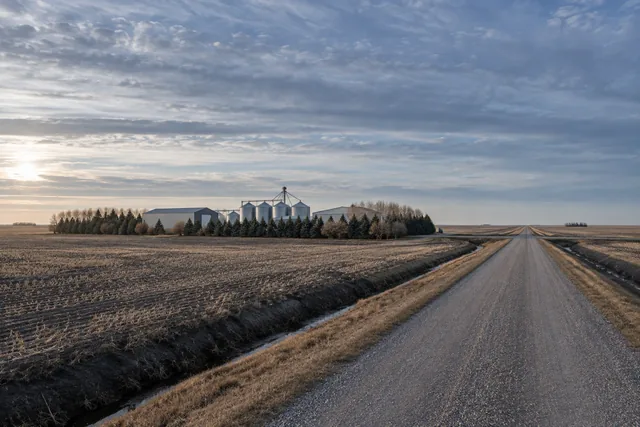
Northern Cass County is about as exposed as building sites get in this region. Flat ground, large fields and long sight lines mean wind arrives at full speed and keeps snow moving until something stops it. Shelterbelts around the older farmsteads exist because of that, and they remain the most effective drift management tool available.
The soil is heavy Lake Agassiz clay, which is excellent farmland and difficult building ground. Raised granular pads and isolated footings taken to 60 inches are the standard response and they work well.
Bonanza-era farming left this part of the county with large field patterns and long uninterrupted sight lines, which is exactly the geometry that keeps wind-driven snow moving. Modern shelterbelts around the farmsteads are the direct response to that, and they remain the most effective drift management available. Where one has been removed or has aged out, the difference in how snow behaves around the yard is usually noticeable within a winter or two.
Before a build around Amenia
Little regulatory complexity here, and a good deal of engineering complexity.
- Establish your township's position
Some have adopted zoning ordinances and some have not. Cass County Planning maintains the township resources and can point you at the right document.
- Be clear about the intended use
The agricultural exemption covers buildings used exclusively for agriculture on a farm. Adding living space or a non-farm commercial use removes it, and that is a design decision rather than a paperwork one.
- Arrange a licensed electrician regardless
The State Electrical Board licenses electricians and enforces the National Electrical Code across the whole state, including where no building inspector exists.
- Tell us where the drifts land
On ground this exposed, wind keeps snow moving until something stops it. Your existing buildings and shelterbelts have already mapped that for you.
How we build in Amenia
- Township ordinance identified
Outside any city boundary, township zoning sets setbacks and land use.
- Agricultural exemption correctly applied
It covers the state building code for buildings used exclusively for agriculture, and nothing else.
- Exposure C design throughout
No shelter upwind, so the wind pressures are calculated for open country.
- Drainage designed, not assumed
Flat ground with heavy clay means water goes where you put it or nowhere.
The absence of a building inspector in some townships is not a reason to build to a lower standard, and we do not. The loads are the loads regardless of who checks them, and a roof designed to 30 psf will not carry 40 just because nobody inspected the drawings. It also matters for resale: a building with no engineering behind it is harder to insure and harder to sell with the farm.
State electrical requirements apply in every township regardless of building inspection, and that catches people out on farm buildings fairly often.
Build it right even where nobody is checking
A roof designed for less than it will carry does not become adequate because no one reviewed the drawing. Beyond the obvious safety point, buildings with engineering behind them are easier to insure and easier to sell with the property, and questions about an undocumented structure tend to surface at the worst possible moment in a transaction. We design to current loads everywhere, and price it that way, because the alternative saves very little and risks a great deal.
How an Amenia build runs
- Step 01Establish the rules
Township ordinance, setbacks, and whether the agricultural exemption genuinely applies to the intended use.
- Step 02Design to current loads
40 psf ground snow load with drift cases and Exposure C wind, regardless of who is inspecting.
- Step 03Pad and foundations
Raised compacted pad with a drainage route, footings to 60 inches with bearing checked.
- Step 04Frame and close in
Structure and roof, then cladding, doors and any concrete.
Questions we get asked in Amenia
Do I need a building permit out here?
It depends on the township, and some have adopted zoning ordinances while others have not. The agricultural exemption under NDCC 54-21.3-03 may apply to the state building code, but zoning and watercourse setbacks still apply, and electrical requirements apply everywhere.
If nobody inspects it, does the engineering matter?
Yes. Snow and wind loads do not depend on inspection. A building designed for less than it will carry will fail eventually, and a building with no engineering behind it is harder to insure and harder to sell with the farm.
Does the electrical work need to be done by a licensed electrician?
Yes. The North Dakota State Electrical Board licenses electricians and enforces the National Electrical Code across the entire state, including in townships with no building inspector and on buildings that are otherwise exempt.
What wind exposure applies here?
Exposure Category C. There is essentially nothing upwind of any site in northern Cass County to slow the wind down, and the design pressures reflect that.
Do you build hay storage?
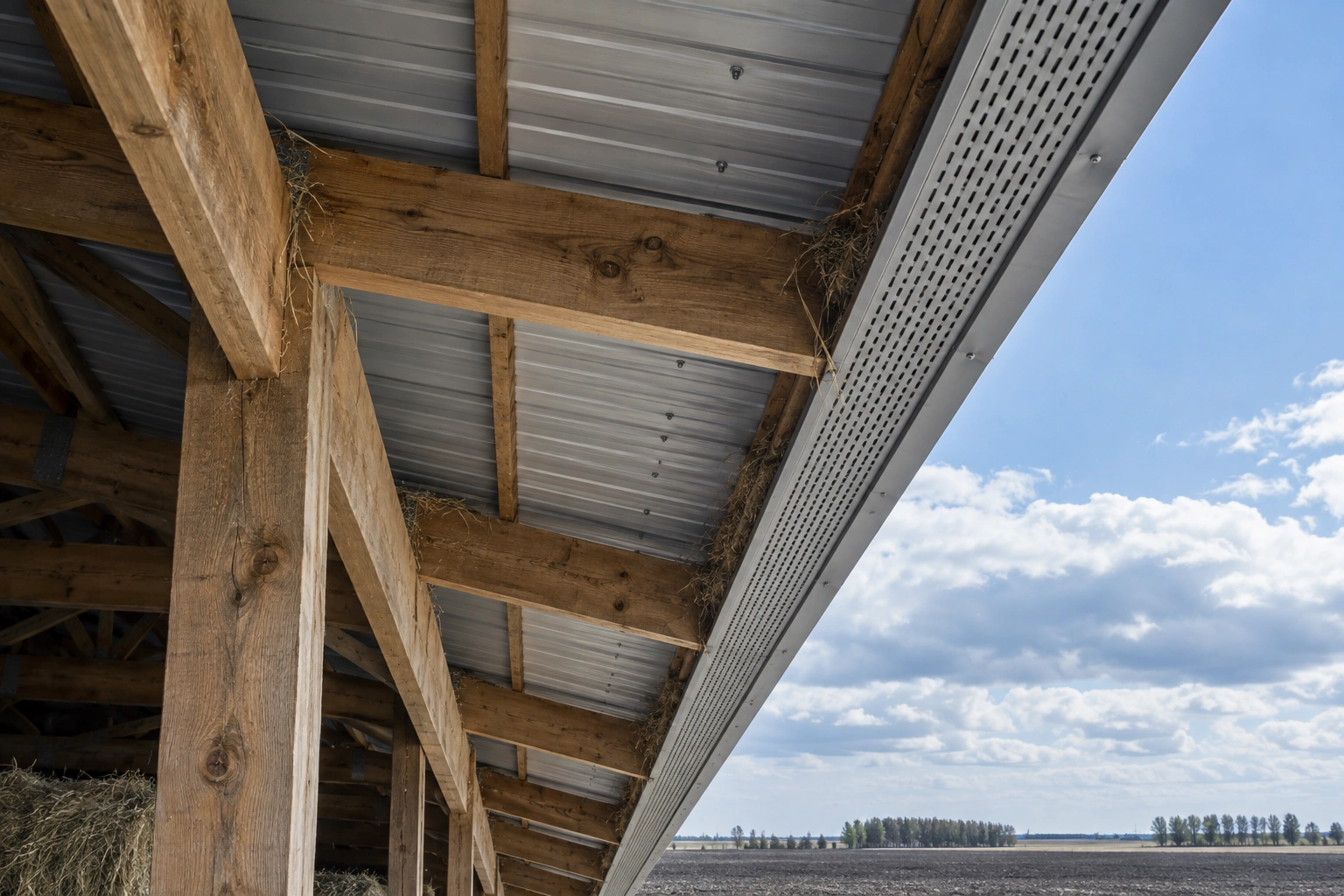
Yes. Tall open-sided sheds sized from your bale dimensions and stack height, with a raised drained pad so the bottom row does not wick moisture out of the clay all winter.
Do you charge to come out to Amenia?
No. Quotes and site visits are free wherever you are in Cass County.
Will I have trouble insuring a building with no permit?
It can come up, and it tends to come up at claim time rather than at policy time, which is the worst moment for it. Insurers increasingly ask what a building was designed to and whether it was inspected. Having engineering behind the structure is worth having even where nobody required it, and it costs very little to do properly the first time.
If my township has no ordinance, is anything still required?
Yes. Electrical work remains under the State Electrical Board's jurisdiction everywhere in North Dakota, with no township opt-out. Floodplain rules still apply, administered through Cass County Planning for jurisdictions outside the National Flood Insurance Program. And if the use is not exclusively agricultural on a farm, the state building code has not been escaped either.
Everything we build in Amenia
Every service is available around Amenia. We design to current loads regardless of what the township requires, so the specification does not change with the postcode.
- Agricultural Pole Barns
- Horse Barns & Equestrian Buildings
- Machine Sheds & Equipment Storage
- Livestock Barns
- Hay Storage Buildings
- Pole Barn Garages
- RV & Boat Storage Pole Barns
- Pole Barn Workshops
- Commercial Pole Barns
- Hobby Shops & Man Cave Pole Barns
- Pole Barn Construction
- Pole Barn Design & Planning
- Pole Barn Foundation & Concrete Work
- Pole Barn Framing
- Pole Barn Roofing Installation
- Pole Barn Siding Installation
- Pole Barn Electrical Rough-In
- Pole Barn Insulation Installation
- Pole Barn Repair
- Pole Barn Renovation & Additions
- Post-Frame Building Construction
- Insulated Pole Barns
- Pole Barns with Living Quarters (Barndominiums)
- Custom Pole Barn Doors & Windows
- Pole Barn Loft & Second-Story Additions
- Metal Roof Pole Barns
- Wood-Sided Pole Barns
- Pole Barn Ventilation Systems
- Pole Barn Site Prep & Grading
- Pole Barn Snow Load Reinforcement
Farm buildings around Amenia
Tell us what you need to store and roughly where. We will design it to current loads whatever the township requires.